
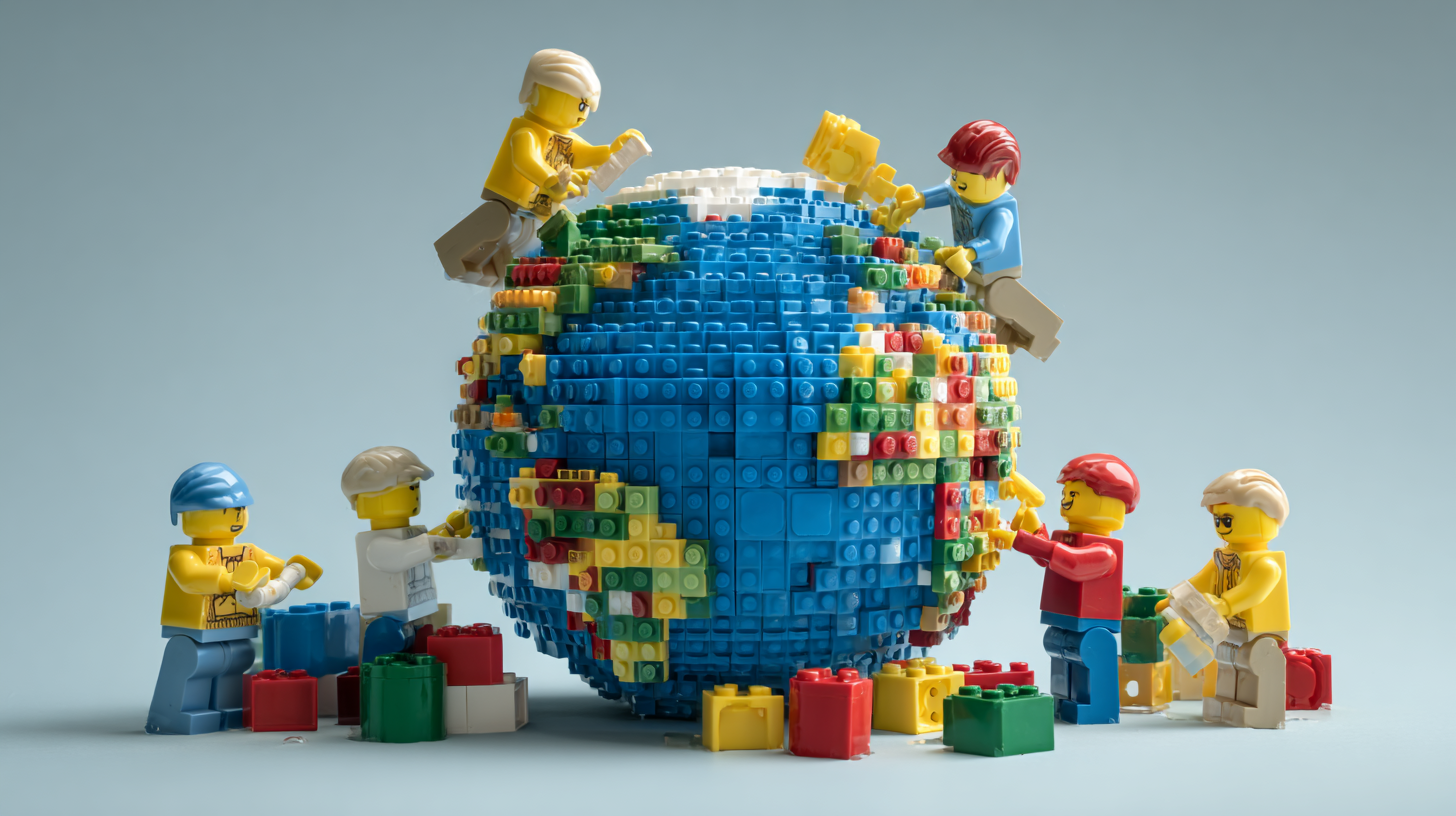
Mapping the World with Minifigs: Data Visualization for All Ages
Sometimes data feels too big. Too abstract. You’ve got columns of numbers, maybe some charts, maybe a map. But it doesn’t click. It doesn’t feel real.
That’s where a little plastic person can actually help.
Minifigs—those small, blocky figures people often think of as toys—are showing up in places you wouldn’t expect. Classrooms. Conferences. Even museum exhibits. They’re being used to tell stories with data in ways that feel physical, relatable, and weirdly satisfying.
You don’t need fancy dashboards or machine learning models to explain something. Sometimes, you just need 50 minifigs lined up in a row to make a point hit home.
Making Data Touchable
Data visualizations are usually screens. Or paper. Or maybe a giant wall projection at a fancy event. But for younger learners, or honestly even distracted adults, that kind of format can get lost fast.
When you use minifigs, you turn something abstract into something touchable.
You want to show how a population breaks down by profession? Put 100 minifigs on a table. Color their torsos by job type. Boom. It’s immediate. You see the imbalance right away.
You want to show how a historical event unfolded over time? Lay out a timeline. Drop in minifigs dressed like soldiers, nurses, protestors, scientists—whatever makes sense for the story. You get a visual, a story, and a sense of scale all at once.
There’s something about picking up a minifig and moving it that changes how you think about information. It’s not just numbers anymore. It’s people. Even if they’ve got smiley yellow faces.
In one project I saw, a teacher used minifigs to represent demographic changes in a city over 100 years. Every decade got its own group. Clothes, skin tone, props—each figure reflected the style of that era. Suddenly you weren’t just talking about census data. You were walking through a living scene.
And yeah, it takes time to build something like that. But it sticks.
Simulations, Roleplay, and Real-World Systems
There’s another layer to this. Minifigs are great for simulations.
Want to model how diseases spread in a population? Hand out minifigs. Mark a few as “infected.” Move them around a classroom grid. Watch what happens over time.
That’s not a spreadsheet. That’s a physical model. And for a lot of learners, that makes a huge difference.
It’s also a helpful tool for social science. You can represent voting populations, income levels, migration patterns, education access—you name it. Build a physical city with blocks. Use minifigs to represent citizens. Then walk through different policy changes. Raise taxes. Add infrastructure. Block a road. Change school zones. Let students watch the system react.
You don’t need high-end software to teach systems thinking. Sometimes minifigs are enough.
And when you’re trying to source specific kinds of figures—like more diverse characters, nontraditional roles, or weird one-off figures you’d never find in a standard set—minifig.biz seems to have all of the weird minifigs you can’t get elsewhere.
Why It Works
The obvious reason is that minifigs are fun. People like them. But that’s not the whole story.
They also represent people in a non-threatening way. They’re abstract enough that learners don’t get stuck on identity, status, or realism. But they’re human enough to carry meaning.
They’re also modular. You can change hair, clothes, accessories. You can make a robot nurse or a pirate teacher if you really want to. That flexibility makes them great for custom builds and specific storytelling.
There’s also something to be said for scale. If you want to show the impact of something like a flood or a power outage, you can cover part of a table in blue bricks, knock over a few minifigs, and you’ve got an immediate scene. It’s not subtle, but it’s effective.
And because these figures can move, bend, or hold items, you can create small animated sequences. Take photos over time. Turn it into a stop motion story. Show change, not just static data.
It doesn’t have to be perfect. The point is that you’re connecting ideas to something visual and active.
A Tool for All Ages
This isn’t just a kid thing. I’ve seen college presentations using minifigs. Public health campaigns. Art installations.
In one example, a city transportation department used minifigs to show how a new bike lane proposal would affect foot traffic, vehicle flow, and pedestrian safety. They mocked up a street with blocks and tiles. Then used different-colored minifigs to represent walkers, bikers, drivers, and delivery workers.
It worked because it was simple. No tech issues. No confusing terms. Just a physical layout and clear movement. People got it instantly.
Another group used minifigs to recreate scenes from different neighborhoods in a rapidly gentrifying city. They paired the physical builds with data visualizations on screens. It gave the stats emotional weight. You could see the figures getting displaced, the new ones moving in. It made people pause.
It’s a little surprising how well this works. But maybe it shouldn’t be. We remember visuals. We connect with stories. We like things we can hold in our hands.
Where to Get What You Need
If you’re serious about using minifigs for this kind of project, you’ll probably hit a wall with standard sets. The default characters are often too samey. Too happy. Too limited.
That’s where custom figures come in.
You can find ones with more realistic outfits, different expressions, specific jobs, or cultural details. You can also get accessories that match modern tech—laptops, cell phones, lab equipment, protest signs, even drones.
I get mine from minifig.biz. You never know what’s going to be in stock, but that’s kind of the point.
I’ve used some of their more obscure figures in projects just to spark conversation. Like, one time I used a zombie businessperson to show burnout data. It got a laugh but also made a real point.
Final Thoughts
Not every dataset needs minifigs. But when you’re trying to make information feel real, when you want to tell a story or build a model or create something people can walk around and interact with—they work.
They’re not just toys. They’re tools. And they’re accessible, adaptable, and surprisingly effective at making complicated things easier to grasp.
So next time you’re planning a lesson, building a demo, or designing a public engagement piece, maybe ask yourself: could a few tiny figures help you say it better?
The answer might be yes. Even if they all have the same little C-shaped hands.